
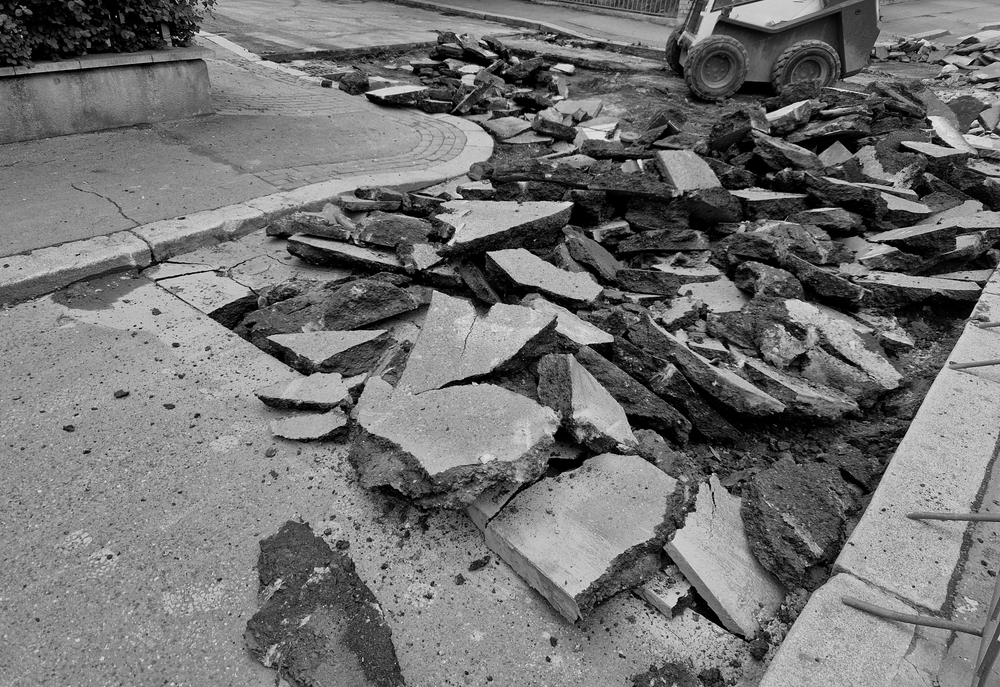
Commercial Asphalt & Concrete Tear-Out: Preparing Durable Sub-Bases for Toledo Retail Centers
Retail parking lots, drive lanes, loading areas, and sidewalks in Toledo have to withstand delivery traffic, customer vehicles, winter weather, and repeated freeze-thaw cycles. When deteriorated asphalt or concrete needs replacement, the durability of the new pavement often depends on what happens below the finished surface.
A proper commercial tear-out is more than removing old pavement. It creates the opportunity to inspect, correct, and prepare the underlying base so the replacement surface has stable support.
Quick answer: Commercial asphalt and concrete tear-out should remove failed pavement and unsuitable underlying material while creating a properly prepared sub-base for the replacement system. For Toledo retail centers, that preparation is particularly important because moisture, freezing temperatures, drainage problems, heavy vehicle traffic, and disturbed base material can contribute to settlement and premature pavement deterioration.
What Toledo Property Owners Should Know
-
Removing damaged pavement exposes the underlying conditions that may have contributed to cracking, settlement, potholes, or uneven surfaces.
-
Northwest Ohio’s seasonal freezing and thawing make drainage and base stability important considerations for commercial pavement.
-
Retail properties near busy corridors such as Monroe Street, Central Avenue, and Airport Highway may experience frequent vehicle traffic that increases demands on pavement systems.
-
Loading areas, dumpster approaches, entrances, and delivery routes often require special attention because concentrated truck traffic can place greater stress on the pavement.
-
Simply placing new pavement over an unstable base can leave underlying problems unresolved.
Why Does Proper Tear-Out Matter for Toledo Retail Centers?
Proper tear-out matters for Toledo retail centers because the replacement pavement needs stable, appropriately prepared support beneath it. Removing the existing asphalt or concrete allows contractors to identify weak areas, unsuitable material, drainage concerns, and other conditions that could affect the performance of the finished parking lot, drive lane, or loading area.
In Lucas County, pavement is exposed to significant seasonal changes. Water can enter cracks or poorly drained areas, and freezing conditions can contribute to movement within pavement and supporting materials.
Commercial properties also have different traffic patterns than residential pavement. Shopping centers may see passenger vehicles throughout the day along with delivery trucks, waste collection vehicles, snow removal equipment, and service vehicles.
Klumm Bros. understands that commercial pavement removal is part of a larger site preparation process. When we approach a tear-out, the goal is to leave the project ready for the next appropriate phase rather than treating demolition as an isolated task.
What Local Conditions Can Affect a Commercial Pavement Sub-Base?
Local pavement sub-bases can be affected by seasonal moisture, freezing and thawing, drainage patterns, existing site conditions, and repeated commercial traffic. In the Toledo area, these factors can work together, making the condition of the material beneath old asphalt or concrete an important part of replacement planning.
A useful field observation during tear-out is whether deterioration appears limited to the pavement surface or continues into the supporting material.
Soft spots, pumping water, visibly saturated material, inconsistent aggregate, and areas that deform under equipment can indicate that additional preparation may be necessary. Existing retail sites can also contain pavement that has been patched or resurfaced multiple times, which can hide variations underneath.
Properties near the Maumee River and other low-lying portions of the region may also require careful attention to site drainage and existing soil conditions. Conditions must be evaluated at the specific property rather than assumed based solely on location.
How Does a Weak Sub-Base Affect Toledo Retail Properties?
A weak or poorly prepared sub-base can contribute to settlement, cracking, uneven pavement, drainage problems, and recurring repairs at Toledo retail properties. These problems can affect more than appearance because commercial pavement supports customer circulation, deliveries, accessible routes, snow removal operations, and everyday property maintenance.
An uneven parking surface can allow water to collect in low areas. Cracking can provide additional pathways for moisture. Depressions in heavily traveled areas can worsen as vehicles repeatedly cross them.
For a busy retail property, recurring pavement work can also mean repeated construction zones and disruptions to parking or traffic flow. Addressing unsuitable underlying conditions during a planned tear-out can help reduce the chance that obvious base-related problems are simply covered by new pavement.
What Warning Signs Suggest the Existing Base May Need Attention?
Warning signs of possible base problems include recurring cracks, depressions, potholes, movement, poor drainage, and failures that repeatedly return after surface repairs. Toledo property managers should pay particular attention to deterioration that develops in the same locations despite previous patching or resurfacing.
Common warning signs include:
-
Cracks that repeatedly reopen after repairs.
-
Potholes that return in the same general area.
-
Depressions where rainwater or melting snow consistently collects.
-
Pavement that appears to sink along drive lanes or parking areas.
-
Broken pavement around catch basins or drainage structures.
-
Severe deterioration in loading zones and dumpster approaches.
-
Concrete slabs that have settled or become noticeably uneven.
-
Areas where the pavement surface moves or deflects under traffic.
These signs do not identify the underlying cause by themselves, but they can justify closer evaluation during removal.
When Should a Toledo Property Manager Call a Professional?
A professional should evaluate commercial pavement when deterioration is widespread, recurring, structurally significant, or likely to involve conditions below the surface. Property managers can monitor minor cracks and drainage patterns, but extensive tear-out and sub-base preparation require equipment, site planning, material handling, and coordination with the replacement pavement work.
This becomes especially important at active retail centers where customers, employees, deliveries, and emergency access may need to continue during construction.
Planning ahead can also help determine whether work should be phased. A retail center near Westgate, Franklin Park, or other busy commercial areas may need to preserve access to portions of the property while removal and reconstruction occur elsewhere.
What Common Conditions Lead to Commercial Pavement Failure?
Commercial pavement problems commonly develop from a combination of moisture, insufficient support, repeated loading, aging materials, and drainage deficiencies. Toledo’s climate can intensify these issues because pavement experiences cold winters, precipitation, snowmelt, and seasonal temperature changes.
1. Water and drainage problems: Water that reaches supporting materials can reduce stability in susceptible areas and contribute to pavement deterioration.
2. Freeze-thaw activity: Moisture combined with freezing and thawing can contribute to movement and deterioration over time.
3. Heavy commercial traffic: Delivery trucks and other heavy vehicles place greater loads on pavement than ordinary passenger vehicles.
4. Previously disturbed or inconsistent material: Older retail sites may have undergone utility work, additions, repairs, and repeated pavement projects that leave varying conditions beneath the surface.
5. Surface deterioration left too long: Once cracks and failures become extensive, moisture and traffic can accelerate damage.
How Can Retail Centers Reduce Future Pavement Problems?
Retail centers can reduce future pavement problems by managing drainage, monitoring developing damage, protecting high-traffic areas, and addressing underlying conditions during reconstruction. Preventive attention is especially useful before Toledo’s winter weather turns small pavement defects into larger maintenance concerns.
Property managers can periodically walk parking lots after heavy rain and note where water collects. They can also watch entrances, loading zones, catch basins, dumpster areas, and delivery routes for accelerated deterioration.
Before winter, obvious cracks, drainage problems, and damaged areas should be evaluated. During a major replacement project, however, DIY inspection should not substitute for professional assessment of excavation depth, unsuitable material, compaction, drainage, or structural pavement requirements.
What Results Should Property Owners Expect From Proper Site Preparation?
Proper site preparation should create a stable, consistent foundation that is appropriate for the planned replacement pavement and expected use of the area. The exact preparation required depends on conditions discovered after tear-out, the pavement design, drainage, traffic demands, and the materials present at the Toledo property.
Some projects may reveal an existing aggregate base that can be appropriately prepared. Other locations may contain soft, wet, contaminated, inconsistent, or otherwise unsuitable material that requires additional work.
The important point is that tear-out provides access to these conditions before the new surface is installed.
What Mistakes Should Commercial Property Owners Avoid?
Commercial property owners should avoid treating pavement removal as simple surface demolition when the replacement depends on what remains underneath. A better approach considers removal, drainage, base conditions, traffic needs, and reconstruction as connected parts of the project.
Mistake: Replacing only the visible failure.
Consequence: An underlying weak area may remain.
Better approach: Evaluate exposed material during tear-out and determine whether additional preparation is appropriate.
Mistake: Ignoring standing water.
Consequence: Moisture problems may continue after replacement.
Better approach: Consider drainage patterns as part of project planning.
Mistake: Treating every area identically.
Consequence: Loading zones and truck routes may have different demands than ordinary parking spaces.
Better approach: Match preparation and pavement design to anticipated use.
Mistake: Planning demolition without considering retail access.
Consequence: Construction can unnecessarily interfere with customers and deliveries.
Better approach: Develop appropriate phasing and access plans before work begins.
What Is a Common Toledo Retail Center Tear-Out Scenario?
A common Toledo retail center scenario involves an older parking area with widespread cracking, previous patches, isolated depressions, and deterioration along heavily traveled routes. This is an illustrative local scenario, not a Klumm Bros. case study.
After the pavement is removed, conditions may vary across the site. A frequently patched drive aisle might expose disturbed or weakened supporting material, while another parking section may have a more consistent existing base.
That difference is why evaluating conditions during tear-out matters. The preparation needed for one portion of a commercial property may not automatically be appropriate for every other portion.
What Services Support a Successful Pavement Replacement Project?
Commercial demolition and site preparation services support pavement replacement by removing failed materials and preparing the work area for the next construction phase. Depending on project conditions, that process can include asphalt or concrete removal, excavation, material handling, grading, and preparation of underlying areas.
For retail properties throughout the Toledo area, coordination is also important. The tear-out phase should account for traffic patterns, adjoining concrete or pavement, drainage structures, utilities, storefront access, and the requirements of the planned replacement system.
Is Full Tear-Out Better Than Another Surface Repair?
Full tear-out is generally the more appropriate option when deterioration is extensive or underlying conditions need to be exposed and corrected, while localized repairs may make sense for isolated surface damage. The right choice depends on the extent and cause of the deterioration rather than appearance alone.
A patch can restore a localized damaged area without rebuilding an entire parking lot. Resurfacing can address certain pavement conditions while retaining existing underlying pavement. Full-depth removal provides greater access when the existing system has widespread deterioration or suspected support problems.
For Toledo property owners, identifying the reason for repeated failure is more useful than automatically choosing the least disruptive option.
What Areas Around Toledo Can Benefit From Commercial Tear-Out Planning?
Commercial tear-out planning is relevant throughout Toledo and surrounding Lucas County communities where aging pavement, seasonal weather, and commercial traffic create reconstruction needs. Retail and commercial properties in Maumee, Sylvania, Oregon, and nearby Northwest Ohio communities can face many of the same pavement preparation considerations.
Site conditions still vary considerably from one property to another, so project planning should be based on the actual conditions present.
What Can Happen If Failed Pavement Is Left in Place Too Long?
Waiting to address severely deteriorated commercial pavement can allow cracking, potholes, drainage problems, and localized failures to become more extensive. At Toledo retail properties, additional deterioration can also complicate customer circulation, snow removal, deliveries, and future repair planning.
Delaying work does not mean every pavement problem will immediately become structural. However, recurring failures and worsening depressions deserve attention, particularly when water is entering damaged areas or heavy vehicles regularly travel across them.
FAQ
How deep should commercial pavement tear-out be in Toledo?
The required tear-out depth depends on the existing pavement structure, observed base conditions, replacement design, and intended traffic loads. There is no single depth appropriate for every Toledo retail property. Removal should be planned around actual site conditions and the requirements of the new asphalt or concrete system.
Why is sub-base preparation important during Toledo winters?
Sub-base preparation is important because moisture and seasonal freezing can contribute to pavement movement and deterioration when underlying support or drainage is inadequate. Toledo experiences winter conditions that make water management and stable supporting materials important considerations when reconstructing commercial parking lots and drive areas.
Can a Toledo parking lot simply be paved over?
Some pavement may be suitable for an overlay, but severely deteriorated areas or suspected base failures may require removal instead. A Toledo property with recurring potholes, substantial settlement, widespread cracking, or drainage problems should be evaluated to determine whether resurfacing would address the underlying cause.
What areas of a retail center usually need the most attention?
Drive aisles, entrances, loading areas, dumpster approaches, drainage structures, and other high-traffic locations often deserve close inspection. These areas can experience concentrated vehicle loading or water-related deterioration. Conditions vary by property, so the complete site should still be evaluated rather than assuming failure is limited to obvious trouble spots.
Does Lucas County’s weather affect commercial pavement?
Yes, Lucas County’s seasonal temperature changes, precipitation, snow, and freezing conditions can influence pavement performance over time. Moisture entering damaged pavement can contribute to additional deterioration, which is one reason drainage, base preparation, and timely maintenance should be considered together on commercial reconstruction projects.
Should tear-out happen before drainage problems are addressed?
Drainage conditions should be considered as part of the overall pavement reconstruction plan rather than treated as an unrelated issue. If water consistently collects in part of a Toledo parking lot, replacing pavement without considering why that area stays wet may leave an important contributing condition unresolved.
How can Toledo retailers limit disruption during pavement removal?
Retailers can limit disruption by planning construction phases, customer routes, delivery access, work zones, and communication before tear-out begins. For active Toledo shopping centers, sequencing work around entrances and heavily used parking areas can help preserve practical access while sections of the property are being reconstructed.
When is full concrete or asphalt removal worth considering?
Full removal is worth considering when pavement has extensive deterioration, recurring failures, major settlement, or underlying conditions that need direct evaluation. It can also be appropriate when a Toledo commercial property is undergoing broader site reconstruction that requires access to materials beneath the existing pavement.
Build the Replacement Pavement on a Better Foundation
Commercial pavement performance starts below the finished surface. For Toledo retail centers dealing with aging asphalt, damaged concrete, drainage concerns, or recurring pavement failures, careful tear-out provides an opportunity to identify and address conditions that could affect the next pavement system.
We can help property owners and project teams plan commercial asphalt and concrete removal with the next phase of construction in mind.
Prepare Your Toledo Retail Property for a Durable Rebuild
Get a clearer understanding of what needs to be removed and prepared before replacement work begins.
Categorised in: Excavation Company