
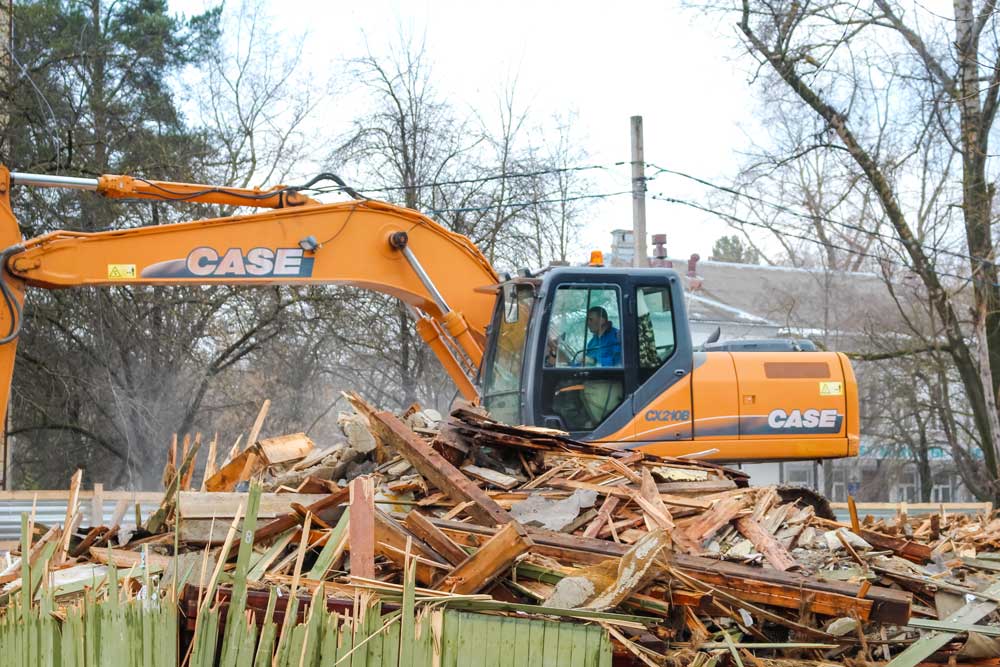
Safe Dismantling of Unstable Farm Structures: Barn and Silo Demolition in Rural Northwest Ohio
Across Fulton County and rural Northwest Ohio, older barns, silos, sheds, and other agricultural structures can remain standing long after they have stopped serving their original purpose. Years of moisture, wind, freeze-thaw cycles, roof deterioration, and changes in farm operations can leave these structures increasingly difficult to maintain and potentially unsafe to approach.
When an aging farm structure reaches that point, demolition is not simply a matter of knocking it down. Safe dismantling requires understanding how the structure has deteriorated, what surrounds it, and how debris can be controlled and removed.
Quick answer: Unstable barn and silo demolition in rural Northwest Ohio should begin with an assessment of the structure, surrounding property, access conditions, utilities, and potential hazards. Structures with leaning walls, failing roofs, deteriorated foundations, or compromised framing can behave unpredictably during dismantling. A controlled demolition plan helps protect people, equipment, nearby buildings, fields, roads, and other improvements on the property.
What Fulton County Property Owners Should Know
-
A barn that looks stable from outside may have significant deterioration in roof framing, foundations, connections, or load-bearing components.
-
Northwest Ohio’s rain, snow, wind, and repeated freezing and thawing can contribute to deterioration of older masonry, concrete, wood, and roofing materials.
-
Rural sites around Wauseon, Archbold, Delta, Swanton, and other Fulton County communities can present access and debris-handling challenges that should be considered before demolition starts.
-
Silos require special planning because their height, weight, construction method, and confined geometry make uncontrolled dismantling particularly hazardous.
-
Utilities, wells, septic components, grain-handling equipment, fences, nearby outbuildings, and active farm areas should be identified before demolition equipment begins working.
Why Does Safe Farm Structure Demolition Matter in Fulton County?
Safe farm structure demolition matters in Fulton County because older agricultural buildings often sit close to working fields, equipment areas, homes, utility lines, livestock facilities, and other structures that need to remain protected. A deteriorated building can also become less predictable as individual structural components lose strength.
Northwest Ohio’s agricultural landscape includes barns and outbuildings from many different periods and construction methods. Some properties have traditional timber framing, while others include masonry, concrete, steel, or combinations of several materials.
A roof failure can push walls outward. A deteriorated foundation can change how a building carries its weight. Missing siding can expose framing to additional weather. With a silo, cracks or deterioration may affect a tall structure carrying substantial loads.
Klumm Bros. provides demolition services for property owners dealing with structures that need to be removed. When we approach a farm demolition project, the objective is controlled removal that accounts for the structure as well as the property around it.
What Local Conditions Can Contribute to Farm Structure Deterioration?
Local weather and long-term exposure can contribute to farm structure deterioration through moisture, freezing temperatures, wind, snow loads, and repeated seasonal changes. In Fulton County, structures that have received limited maintenance may experience these stresses year after year.
Freeze-thaw cycles are especially relevant to older masonry and concrete. Water entering cracks or deteriorated joints can freeze and expand. Wood structures can experience rot where roofs leak or drainage keeps framing wet. Metal components may corrode after prolonged exposure to moisture.
These conditions do not mean every older barn or silo requires demolition. They do mean that visible age alone does not tell the whole story. The condition of structural connections, foundations, walls, roofs, and supporting members matters when determining whether a building can be approached and dismantled safely.
How Can an Unstable Barn or Silo Affect a Rural Property?
An unstable barn or silo can affect a rural property by creating safety concerns, limiting usable space, complicating access, and potentially threatening nearby structures or equipment. Deterioration can also increase the difficulty of eventual removal if portions of the building collapse before a controlled demolition takes place.
For working farms, location matters. An unused building near machinery routes, grain operations, livestock areas, or frequently traveled driveways may create a different concern than an isolated structure.
Properties along rural roads outside Wauseon, Archbold, Fayette, Delta, or Swanton may also have limited equipment access or nearby drainage features that affect demolition planning.
Removing an obsolete structure can make the area easier to manage, but the process should account for what will remain after demolition, including access routes, adjacent buildings, and the condition of the site.
What Warning Signs Can Indicate an Agricultural Structure Is Becoming Unstable?
Warning signs of an unstable agricultural structure include visible leaning, roof failure, major cracking, deteriorated framing, foundation movement, and structural components pulling apart. Property owners should observe questionable buildings from a safe location rather than entering them to investigate.
Signs to watch for include:
-
Roof sections that are sagging, partially collapsed, or missing significant structural support.
-
Exterior walls that bow, lean, separate, or appear to have shifted.
-
Large cracks or displaced sections in concrete or masonry silo walls.
-
Rot, insect damage, or severe weathering visible in major wood framing.
-
Failed foundations, settling, or sections where structural supports no longer appear properly seated.
-
Doors, openings, or framing that have become noticeably distorted as the structure moves.
-
Loose siding, roofing, masonry, or other materials that could fall without warning.
-
Recent changes following strong winds, heavy snow, storms, or prolonged wet conditions.
When Should You Call a Professional for Barn or Silo Demolition?
You should call a demolition professional when a barn, silo, or outbuilding shows significant structural deterioration, has partially collapsed, or cannot be safely inspected or dismantled using ordinary property-maintenance methods. Tall structures and buildings with uncertain structural integrity require particular caution.
Property owners can usually observe a structure from a safe distance and note obvious changes. Entering an unstable barn, climbing a silo, removing structural members, or attempting to pull down a compromised building can expose people to unpredictable collapse.
Professional evaluation is also appropriate when the structure is close to a residence, roadway, utility, occupied building, or other property feature that must remain undamaged.
What Common Conditions Lead to Barn and Silo Demolition in Northwest Ohio?
Common conditions leading to barn and silo demolition in Northwest Ohio include long-term weather exposure, water intrusion, foundation deterioration, obsolete agricultural use, and damage that has progressed beyond practical maintenance. Often, several of these conditions occur together.
1. Roof deterioration: Once roofing fails, rain and snow can reach framing and interior components, accelerating deterioration.
2. Moisture and drainage problems: Water around foundations or entering masonry can contribute to long-term structural damage.
3. Freeze-thaw deterioration: Repeated freezing and thawing can worsen existing cracks and weaknesses in masonry and concrete.
4. Structural movement: Leaning walls, settlement, failed connections, and shifting foundations can make dismantling more complex.
5. Long-term vacancy: Buildings that are no longer used may receive less frequent maintenance, allowing small problems to become significant.
6. Changing farm needs: An older barn or silo may no longer fit current equipment, storage, or operating requirements, leading property owners to consider removal rather than continued upkeep.
Can Property Owners Prevent an Older Farm Structure From Becoming a Demolition Hazard?
Property owners can reduce deterioration by keeping water out, maintaining drainage, monitoring structural changes, and addressing small problems before they become major failures. These measures are most useful while a building remains structurally sound enough to inspect and maintain safely.
Seasonal exterior checks can help identify missing roofing, damaged siding, blocked drainage, foundation cracks, or new movement. After severe weather, owners can visually compare the building with its previous condition.
DIY inspection should stop where structural stability becomes uncertain. Do not enter a visibly failing structure simply to determine how bad the damage is. The information gained is rarely worth the additional exposure to collapse or falling material.
What Should You Expect From Professional Farm Structure Demolition?
Professional farm structure demolition should involve planning how the structure will be taken down, how equipment will reach it, what nearby features require protection, and how demolition debris will be managed. The exact process depends heavily on the building’s construction, condition, location, and surrounding property.
A timber barn may require a different demolition sequence than a concrete silo. A structure beside an open field offers different working conditions than one positioned between active farm buildings.
The site after demolition also matters. Property owners should discuss debris removal and their intended use for the area so the demolition scope is clear before work begins.
What Mistakes Should Property Owners Avoid With Unstable Farm Buildings?
The biggest mistakes involve underestimating instability, entering compromised structures, and beginning dismantling without considering how the remaining structure will react.
Mistake: Removing supports from a deteriorated structure.
Consequence: Loads may shift to weakened components and trigger an uncontrolled collapse.
Better approach: Have the demolition sequence evaluated before structural members are disturbed.
Mistake: Treating a silo like a small outbuilding.
Consequence: Its height, mass, and construction create substantially different demolition considerations.
Better approach: Plan specifically for the silo’s construction and surrounding clearances.
Mistake: Ignoring nearby property features.
Consequence: Debris or equipment movement can affect fences, roads, fields, utilities, and buildings that need to remain.
Better approach: Identify those features before demolition begins.
Mistake: Waiting until partial collapse occurs.
Consequence: A partially collapsed structure may be harder to access and dismantle predictably.
Better approach: Evaluate significant deterioration before conditions worsen.
What Is a Common Farm Demolition Scenario in Fulton County?
A common Fulton County scenario is an older barn or agricultural outbuilding that has been unused for years while roof and structural deterioration gradually progresses. This is a representative local scenario, not a specific Klumm Bros. project.
The owner may first notice missing roofing or a sagging roofline. Later, walls begin leaning or sections of framing deteriorate. Meanwhile, the building remains near an equipment route, another outbuilding, or land the owner wants to put back into use.
At that stage, the question becomes less about preserving an obsolete structure and more about how it can be removed in a controlled way without creating unnecessary risk elsewhere on the property.
What Demolition Services Can Help With Unstable Farm Structures?
Demolition services can help property owners plan and carry out the controlled removal of barns, silos, sheds, and other obsolete structures when those buildings have become impractical or unsafe to retain. The appropriate solution depends on the structure, access, surrounding property, and desired condition of the site afterward.
For rural properties, planning may include equipment access, demolition sequencing, debris management, and protection of improvements that will remain.
Is DIY or Professional Demolition the Better Option?
Professional demolition is generally the appropriate option when a farm structure is unstable, tall, heavy, partially collapsed, or positioned near valuable property. Simple cleanup around a sound building is very different from dismantling structural components whose remaining strength may be uncertain.
DIY work may be reasonable for minor nonstructural maintenance performed from a safe location. Once work involves load-bearing framing, compromised walls, silo structures, heavy debris, or uncontrolled fall zones, specialized equipment and demolition planning become much more important.
What Areas Can Rural Property Owners Consider for Farm Demolition Service?
Farm demolition needs occur throughout Fulton County, including properties around Wauseon, Archbold, Delta, Swanton, Fayette, and the surrounding Northwest Ohio countryside. Rural properties differ considerably in building layout, road access, field conditions, and proximity to occupied structures.
For that reason, the structure and site should be considered together rather than treating every barn or silo demolition as the same type of project.
What Can Happen If an Unstable Farm Structure Is Left in Place?
Leaving an unstable farm structure in place can allow deterioration to continue until portions fail on their own, potentially increasing safety concerns and complicating eventual cleanup. Wind, precipitation, freeze-thaw cycles, and additional structural movement can continue affecting a building that is already compromised.
Waiting does not automatically mean a structure will collapse soon, and an accurate timeline cannot be predicted from appearance alone. However, visible deterioration is a reason to restrict access and determine whether professional evaluation or removal is appropriate.
FAQ
Is an old leaning barn automatically unsafe to enter in Fulton County?
A visibly leaning barn should be treated cautiously because leaning can indicate foundation movement, connection failure, framing deterioration, or other structural problems. Appearance alone cannot establish exactly how stable the building remains. If there are significant signs of movement or failure, avoid entering and seek professional guidance before disturbing the structure.
Can a concrete silo be demolished like a regular farm building?
No. A concrete silo requires demolition planning specific to its height, mass, construction, condition, and surroundings. Its behavior during dismantling differs significantly from that of a typical wood-framed outbuilding. Fulton County property owners should avoid attempting uncontrolled silo removal, particularly where buildings, roads, utilities, or other improvements are nearby.
Does Northwest Ohio weather contribute to old barn deterioration?
Yes. Moisture, snow, wind, temperature changes, and freeze-thaw cycles can contribute to deterioration over time. The effect depends on the structure’s materials and maintenance history. Roof leaks can expose wood framing to moisture, while existing cracks in masonry or concrete can worsen as water repeatedly freezes and thaws.
Should I enter an unstable barn to see what condition the framing is in?
No. If a barn already shows signs of significant instability, entering it to inspect framing can expose you to falling materials or structural collapse. Observe obvious conditions from a safe location instead. A closer assessment should only occur when it can be performed without placing someone beneath or inside compromised structural components.
What should be considered before demolishing a barn in Fulton County?
The structure’s condition, construction, surrounding buildings, utilities, access routes, debris, and intended use of the site should all be considered before demolition. Rural properties may also require planning around fields, equipment routes, fences, drainage, livestock areas, and other improvements that need to remain accessible and protected.
Is partial collapse a reason to schedule demolition quickly?
A partial collapse is a strong reason to restrict access and seek professional evaluation because the remaining structure may have experienced major changes in how loads are supported. Additional sections could be unstable. Prompt assessment can help determine a controlled approach rather than allowing people to work around unpredictable debris and structural components.
Can an unused barn near Wauseon be left standing if nobody enters it?
Possibly, but lack of occupancy does not eliminate every concern. Consider whether the structure could affect nearby buildings, equipment areas, roads, utilities, or anyone who might enter the property. Continued deterioration can also make future removal more complicated. The building’s actual condition and location should guide the decision.
When is the best time for farm building demolition in Northwest Ohio?
The practical timing depends on site conditions, access, weather, farming activities, and the urgency created by the structure’s condition. Property owners may prefer to coordinate demolition around field work or other operations. An actively unstable structure, however, should be evaluated based on safety rather than waiting solely for a preferred season.
Make an Aging Farm Structure Safer to Address
Old barns and silos are part of the rural landscape throughout Fulton County, but once serious structural deterioration develops, careful planning becomes more important than simply getting the building down. We can help property owners evaluate demolition options with the surrounding farm, access, and remaining structures in mind.
Categorised in: Barn Demolition