
Hydroseeding vs. Sodding: Solving Post-Excavation Soil Erosion in Holland and Monclova
Excavation projects leave behind more than bare soil. They often create loose, unstable ground that can quickly wash away during heavy rain if it is not stabilized. For property owners in Holland and nearby Monclova Township, choosing the right solution after excavation can make the difference between a healthy lawn and costly erosion repairs.
Quick Answer
Hydroseeding and sodding are both effective ways to control post-excavation soil erosion, but the right choice depends on your timeline, budget, site conditions, and erosion risk. Hydroseeding provides broad, cost-effective coverage that establishes strong root systems over time, while sod delivers immediate ground coverage and erosion protection for high-priority areas.
What Local Readers Should Know
-
Northwest Ohio experiences heavy spring rains and summer thunderstorms that can quickly erode freshly graded soil.
-
Clay-rich soils found throughout Lucas County often require proper grading and vegetation to prevent runoff.
-
Hydroseeding is typically more economical for large residential and commercial properties after excavation.
-
Sod provides instant coverage, making it useful for slopes, entrances, and highly visible areas that need immediate stabilization.
-
Proper site preparation is just as important as choosing between hydroseeding and sod.
Why This Matters Locally
Post-excavation erosion is a common concern throughout Holland, Monclova Township, Springfield Township, and surrounding areas of Lucas County. Construction projects, utility work, new home builds, drainage improvements, and landscape renovations frequently expose large sections of soil.
Seasonal weather adds another challenge. Spring rainfall, summer downpours, and winter freeze-thaw cycles can loosen exposed soil before vegetation has a chance to establish. Without proper stabilization, sediment can wash into drainage systems, create uneven grades, and make future landscaping more difficult.
Klumm Bros. understands these local conditions because we regularly help property owners restore disturbed ground after excavation projects. Our goal is to establish healthy vegetation while minimizing erosion and protecting the long-term stability of your property.
Local Data and Field Observations
According to the USDA Natural Resources Conservation Service, vegetation is one of the most effective long-term methods for reducing soil erosion because established root systems help anchor soil while slowing surface runoff. In our experience throughout Holland, Monclova Township, and nearby communities, freshly excavated sites with exposed slopes or compacted soil benefit significantly from prompt stabilization before major rain events.
Hydroseeding vs. Sodding: Which Is Better?
Hydroseeding and sodding both reduce erosion, but each serves different situations.
Hydroseeding
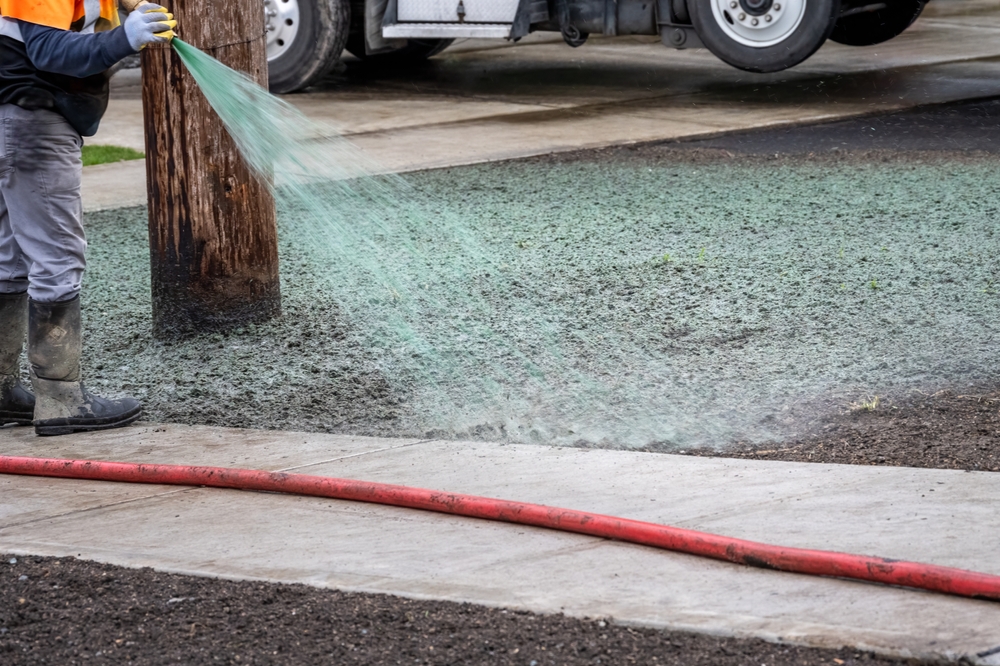
Hydroseeding applies a slurry of seed, mulch, fertilizer, tackifier, and water across prepared soil.
Benefits include:
-
Excellent coverage over large properties
-
Lower installation costs than sod for expansive areas
-
Strong long-term root development
-
Flexible seed blends for local growing conditions
-
Effective coverage on irregular terrain
Potential limitations include:
-
Requires watering during establishment
-
Takes several weeks before full ground coverage develops
-
Heavy rain shortly after installation can affect germination if site preparation is inadequate
Sodding
Sod consists of mature grass grown elsewhere and installed directly over prepared soil.
Benefits include:
-
Immediate erosion protection
-
Instant green appearance
-
Faster usability
-
Reduced weed competition during establishment
Potential limitations include:
-
Higher material and installation costs
-
More labor intensive
-
Less practical for very large sites
Local Impact
Post-excavation erosion affects more than appearance. Soil movement can create drainage issues, expose utility trenches, undermine retaining walls, and damage newly installed landscaping.
For homeowners in Holland and neighboring communities, erosion may also lead to muddy yards, clogged drainage systems, and additional grading expenses. Commercial property owners can experience sediment washing onto parking lots, sidewalks, and neighboring properties, creating maintenance concerns and potential safety hazards.
Warning Signs of Developing Soil Erosion
Early signs of erosion should not be ignored because they often worsen after repeated rainfall.
Common warning signs include:
-
Small channels forming across bare soil
-
Exposed tree roots or utility lines
-
Soil collecting near sidewalks or driveways
-
Mud washing into storm drains
-
Uneven settling after excavation
-
Standing water following rain
-
Bare patches where seed fails to establish
When to Call a Professional
Professional evaluation is recommended when erosion extends beyond minor surface runoff or when slopes become unstable.
Property owners can safely monitor:
-
Small bare spots
-
Watering schedules
-
Early grass growth
-
Minor washouts
Professional assistance is advisable when:
-
Gullies continue to deepen
-
Slopes exceed manageable grades
-
Drainage patterns need correction
-
Large excavation areas require stabilization
-
Repeated erosion occurs after rainfall
Common Local Causes of Post-Excavation Erosion
Several factors commonly contribute to erosion throughout northwest Ohio.
1. Heavy Seasonal Rainfall
Spring storms often arrive before new vegetation becomes established.
2. Compacted Construction Soil
Excavation equipment frequently leaves soil compacted, reducing water absorption and increasing runoff.
3. Steep Grading
New construction sometimes creates slopes that require additional stabilization measures.
4. Clay-Dominant Soil
Many properties throughout Lucas County contain heavier soils that drain slowly and produce greater surface runoff.
5. Delayed Vegetation
Leaving disturbed soil exposed for extended periods increases erosion risk.
Prevention and Maintenance
Preventing erosion begins immediately after excavation.
Helpful practices include:
-
Stabilize exposed soil as soon as grading is complete.
-
Water newly seeded areas consistently.
-
Redirect concentrated runoff away from vulnerable slopes.
-
Repair small washouts before they expand.
-
Limit foot and vehicle traffic during establishment.
-
Schedule seeding during favorable growing seasons whenever possible.
DIY maintenance works well for watering and monitoring, but significant grading corrections should be handled by experienced professionals.
Expected Results
Both hydroseeding and sodding can produce durable, attractive turf when installed correctly.
Hydroseeding typically develops gradually over several weeks while establishing deep root systems that help stabilize soil. Sod provides immediate visual improvement and erosion protection but still requires proper watering while roots establish into native soil.
The overall success of either option depends on site preparation, grading, irrigation, weather, and ongoing maintenance.
Common Mistakes
Mistake: Waiting several weeks after excavation before stabilizing soil.
Consequence: Rainfall begins washing away valuable topsoil.
Better Approach: Stabilize exposed areas as soon as practical after grading.
Mistake: Choosing solely based on upfront cost.
Consequence: The selected solution may not match the property’s erosion risk.
Better Approach: Consider slope, drainage, budget, and timeline together.
Mistake: Ignoring drainage issues.
Consequence: Water continues eroding even healthy grass.
Better Approach: Correct drainage problems before installing vegetation.
Common Local Scenario
A homeowner completes a backyard grading project after installing a new drainage system. The yard looks level, but several heavy spring storms arrive before grass becomes established. Small erosion channels begin forming along the slope. Installing an appropriate stabilization solution quickly helps prevent additional soil loss while supporting healthy turf establishment.
Related Service Solutions
Post-excavation erosion control often works best alongside other site improvement services, including:
-
Site grading
-
Final landscaping
-
Drainage improvements
-
Hydroseeding
-
Sod installation
-
Soil preparation
Comparing Your Options
| Feature | Hydroseeding | Sodding |
|---|---|---|
| Initial Appearance | Gradual | Immediate |
| Erosion Protection | Develops as grass establishes | Immediate |
| Best For | Large properties | High-visibility areas |
| Cost | Generally lower for large areas | Higher upfront investment |
| Installation Speed | Fast application | Labor intensive |
| Root Development | Excellent long term | Establishes after installation |
Service Areas
We proudly serve property owners throughout Holland, Monclova Township, Springfield Township, Maumee, Sylvania, and surrounding communities across Lucas County. Whether your excavation project involves residential landscaping or commercial development, proper erosion control helps protect your investment.
Cost of Ignoring the Issue
Ignoring post-excavation erosion can lead to repeated grading work, damaged landscaping, drainage problems, and higher restoration costs. Acting early is typically more affordable than repairing extensive soil loss after multiple storm events.
Frequently Asked Questions
Is hydroseeding good for erosion control in Holland?
Yes. Hydroseeding is an effective erosion control solution for many Holland properties because it establishes vegetation over large areas while promoting strong root development that helps stabilize soil.
Is sod better than hydroseeding after excavation?
Yes, in some situations. Sod offers immediate coverage and erosion protection, making it a strong option when instant stabilization or appearance is the highest priority.
How long does hydroseeding take to grow in northwest Ohio?
Hydroseeded lawns typically begin germinating within a couple of weeks under favorable growing conditions, although full establishment depends on weather, watering, and seed selection.
Does clay soil affect erosion in Lucas County?
Yes. Clay-heavy soils commonly found throughout Lucas County can increase runoff during heavy rain, making proper grading and vegetation especially important.
Can hydroseeding be used on slopes?
Yes. Hydroseeding is commonly used on slopes because the mulch and tackifier help keep seed in place while vegetation develops.
Which option costs less for large properties near Monclova Township?
Hydroseeding is generally the more economical choice for covering large areas while still providing effective long-term erosion control.
Should erosion control begin immediately after excavation?
Yes. Stabilizing exposed soil promptly helps reduce sediment loss and protects freshly graded surfaces from storm damage.
Can hydroseeding and sod be combined?
Yes. Many projects benefit from using sod in highly visible or steep areas while hydroseeding larger sections for cost-effective coverage.
Protect Your Property with the Right Erosion Control Solution
Choosing between hydroseeding and sodding depends on your property’s needs, but acting quickly after excavation is the key to protecting your investment.
Categorised in: Hydroseeding